






Three years of war: Despite heavy losses, Sudan’s youth voice renewed hopes for the future
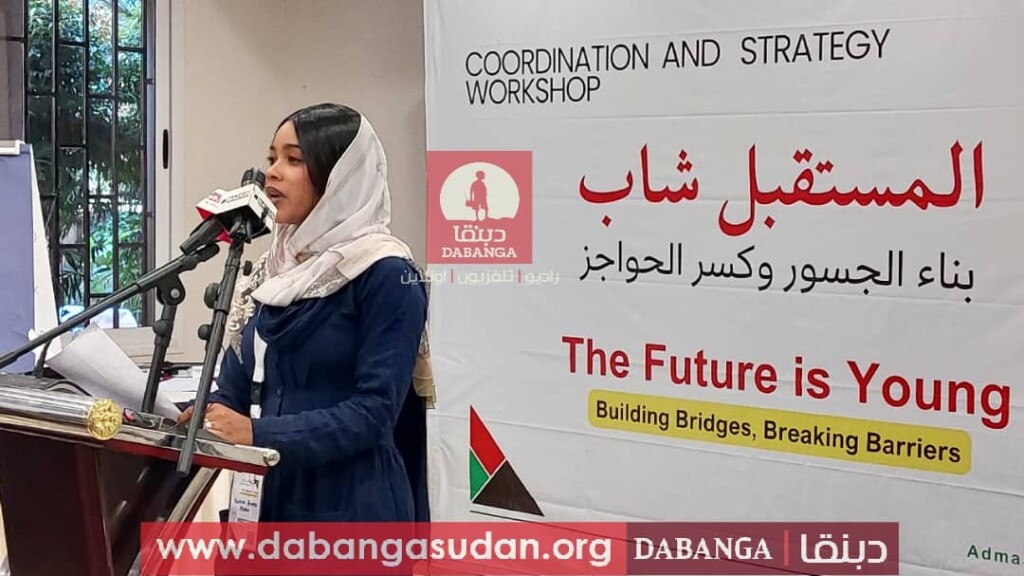
Youth groups sign a declaration for joint action towards lasting peace and a democratic future in Sudan (File photo: Radio Dabanga)
Report by Amin Ramadan for Radio Dabanga
The ongoing war in Sudan, which began on April 15, 2023, has left devastating and catastrophic effects on the lives of Sudanese people, particularly on the lives and futures of young people. In an extensive survey conducted by Radio Dabanga – marking over 1,000 days since the start of the war – a group of youth leaders confirmed that the conflict, now nearing its third year, has disrupted education and employment opportunities, increased unemployment, and worsened living conditions. This has left young people more vulnerable to despair and hopelessness, diminishing their aspirations for a secure and stable future.
Haider Abdel Karim, a member of the Sudanese Youth Network for Ending the War and Establishing a Civil Democratic Transition, told Radio Dabanga that the war has exacerbated divisions among youth and different segments of society, reinforcing tribal rhetoric and encouraging bias towards the warring parties, which has led to a huge waste of human resources, especially since Sudan is a young country whose economy and society depend mainly on the youth and children.
According to Abdul Karim, the number of civilian and military victims has exceeded 150,000, according to UN and humanitarian organisations’ estimates. He added that the recruitment of young people by the warring parties increases the scale of human losses and threatens the country’s developmental future.
He said that the war has caused many to lose their bearings, turning them into refugees and displaced persons, in addition to the difficulty of finding suitable job opportunities and the decline in capabilities and knowledge, which has negatively affected the lives of young people and the level of public services, despite the efforts made previously.
Despite this difficult reality, Abdul Karim emphasised that hope for renewal and reconstruction remains. He explained that the passage of more than a thousand days since the start of the war should be a catalyst for self-reflection and renewed determination, and for working to transform this phase into a new beginning for achieving national aspirations.
Haider Abdel Karim expressed his optimism about the future of Sudan, hoping that it would be a unified homeland, inclusive of all, where the slogans of the revolution such as “freedom, peace, and justice” are realised, and where young men and women lead the way in building a bright future and creating a better environment for future generations.
A senseless war:
For his part, Ahmed Hammad, a member of the emergency room in Babanusa city in West Kordofan state, described the war in Sudan as one of the most chaotic and disastrous situations known to humankind, stressing that its impact has extended to all aspects of life, leaving disastrous effects on citizens, especially young people and children.
In an interview with Radio Dabanga, Hammad described the war in Sudan as “absurd,” meaningless, and essentially aimed at dismantling the country and increasing internal divisions, rather than achieving any real gains for the Sudanese people.
He explained that the war caused widespread destruction, disrupting the lives of citizens, especially young people, and halting their futures. It also led to an entire generation being dropped out of the education system, increased unemployment, and instability among youth, and inflicted psychological, material, political, economic, and social damage. He emphasised that no benefit could be expected from this destructive war, expressing his hope that the crisis would end as soon as possible so that the Sudanese people could rebuild and resume their normal lives.
Abortion of the youth’s future:
For his part, activist Hassan Abdullah told Radio Dabanga that the ongoing war in Sudan, which has now lasted over a thousand days, has had catastrophic effects on society, especially the youth, and threatens the future of the entire nation. He explained that the war, which began as a supposedly temporary conflict, has transformed into a permanent reality of loss, displacement, hunger, and fear, making time in Sudan a measure of missing faces, destroyed homes, and shattered dreams.
Abdullah described the war as an ongoing crime, not merely senseless chaos, placing full responsibility on those who chose weapons over dialogue and bullets over politics. He emphasised that civilians are victims, not accomplices in the crime. This coincides with a blatant international silence, as the international community merely issues statements of concern and condemnation while Sudan disintegrates before the world’s eyes.
Abdullah pointed out that the country has lost an entire generation of young people who were supposed to be the cornerstone of its development and progress. Many of them have become victims of the conflict, forced to emigrate, or compelled to take up arms. The war has also led to the closure of universities, the collapse of small businesses, and left thousands of graduates without job opportunities or a secure future. Furthermore, the war has produced a generation traumatised and distrustful of politics and leadership, while hate speech has torn apart the social fabric, inflicting damage even deeper than the war itself.
Youth between loss and resilience:
For his part, activist Ahmed Ibrahim considered the passage of more than a thousand days since the outbreak of war in Sudan not merely a number, but a thousand days of continuous loss, fear, and disruption of life. He pointed out that this war has achieved nothing but the destruction of people’s lives and has directly affected young people, altering the course of an entire generation that sought stability and a future.
In an interview with Radio Dabanga, Ibrahim explained that the war caused universities to shut down, job opportunities to decline, and the economy to collapse, leaving thousands of young people trapped between unemployment, displacement, and insecurity.
On a psychological level, Ibrahim emphasised that the war has left behind deep anxiety and frustration, making these feelings a part of daily life, with the loss of loved ones, repeated traumas, and the absence of any clear end in sight. This is in addition to the devastating social consequences, pointing to the disintegration of the social fabric and the increased burden of responsibilities placed on young people due to the weakness of the state and its protection and support institutions.
Youth resilience and initiatives:
Ibrahim added, “Despite the harshness of these thousand days, Sudanese youth have demonstrated remarkable resilience and initiative, whether through volunteer work or supporting affected communities. This confirms that they are a strong and creative generation, not weak as some try to portray them.” He continued, “What comes after a thousand days of war? How many more days does Sudan need to choose life and grant its youth their right to peace and a future?”
 and then