





Justice caught in the crossfire as Sudan conflict nears thousandth day
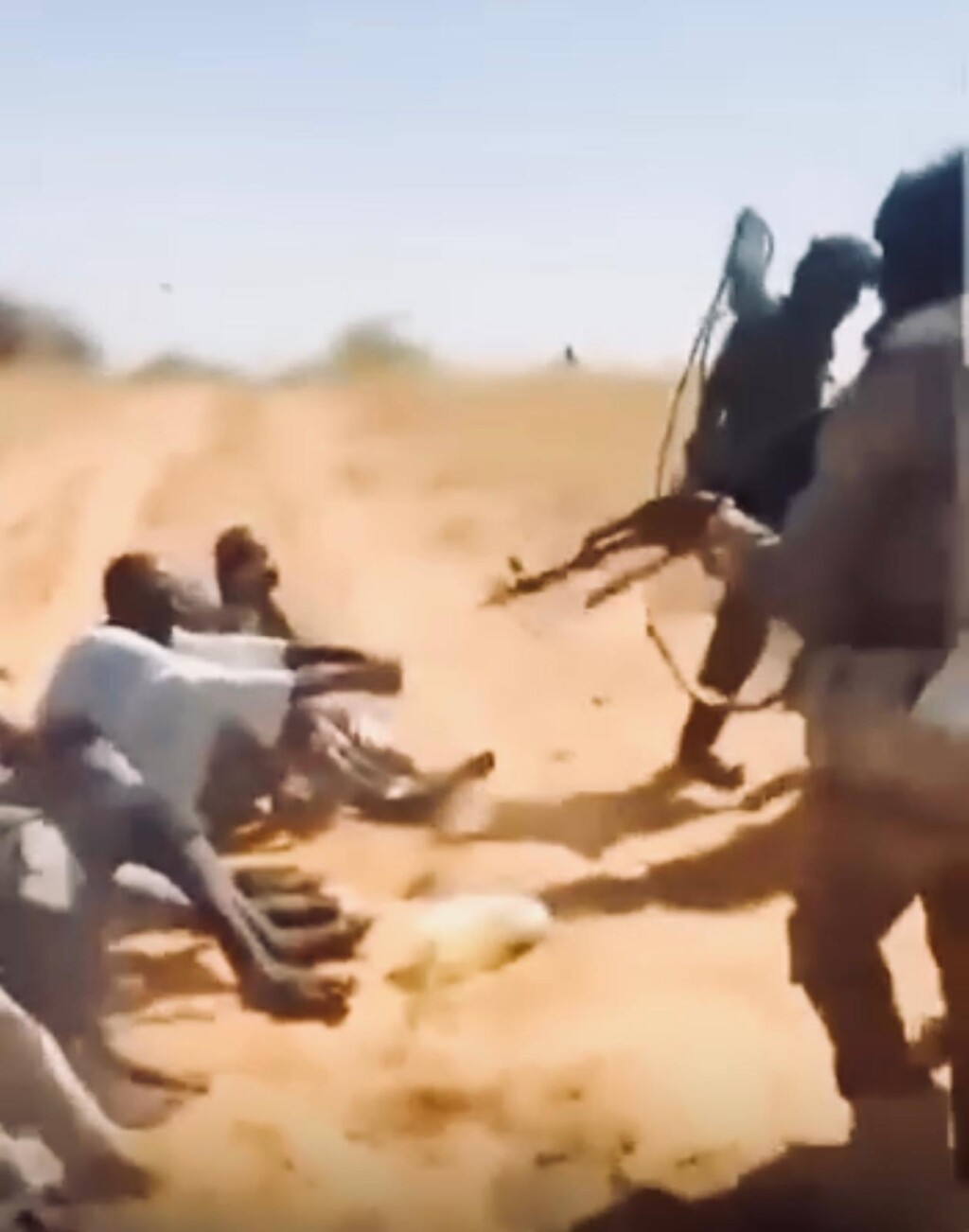
Sreenshot of video widely shared on social media purported to show the execution of civilians fleeing El Fasher
The war raging in Sudan between the Sudanese Armed Forces (SAF) and the paramilitary Rapid Support Forces (RSF), since its outbreak in mid-April 2023, is approaching its thousandth day, amid a continuous escalation in the pace of fighting and an increase in serious violations against civilians, which international and local observers believe amount to documented war crimes and crimes against humanity.
These violations have affected women, children, the sick, the elderly, and prisoners, as well as medical personnel and humanitarian workers, raising urgent questions about the future of justice in Sudan, how to achieve it, and whether international trials – especially the trial of former Darfur militia leader Ali Kushayb before the International Criminal Court – represent a glimmer of hope for justice for the victims, or a forced alternative to national justice.

In this context, Sami Abdelhalim Saeed, former legal advisor to the United Nations and Vice President of the African Network for Constitutional Lawyers (ANCL), says that the outbreak of wars practically means the absence of peace, as the lack of security is the essence of the absence of peace, and justice in its comprehensive sense is one of the first victims of armed conflicts.
In an interview with the Scales of Justice programme broadcast by Radio Dabanga, Saeed explains that justice in the context of the Sudan war was “among the martyrs,” pointing to the systematic destruction that affected justice institutions and systems, in addition to the displacement of competent people working in the judicial field.
He adds that access to justice during war becomes almost impossible, as the victims see the perpetrators with their own eyes, but they are unable to claim their rights, especially if the perpetrator has influence or a position of power, explaining that demanding justice in such circumstances may cause the victim more harm than what he suffered previously.
He points out that Sudan has witnessed cases of perpetrators committing grave violations, while victims have been unable to pursue legal action against them amidst an atmosphere of terror, intimidation, murder, and torture.
Regarding how to achieve justice in wartime, Saeed states that justice should be a top priority for the state, as it is a fundamental prerequisite for achieving human dignity, which begins with guaranteeing basic freedoms, foremost among them the right to life, liberty, and personal security—rights that are severely eroded during armed conflicts.
He adds that the state, even in wartime conditions, is required to make exceptional efforts and provide mechanisms – even if temporary – to ensure security and protect people, noting that prosecutors were supposed to apply strict justice procedures as part of recognised humanitarian principles.
He explains that the state’s preoccupation with the war does not absolve it of its responsibility to confront the phenomena of theft, looting of citizens’ property, and destruction of public institutions. He points out that the dissemination of videos documenting these violations and threatening the safety of citizens also necessitates strict security measures, within the framework of a fundamental commitment to protecting civilians.
He emphasises that the state’s failure to protect its citizens deprives the war of its moral and legal justification.
Regarding resorting to the International Criminal Court, Saeed says that international justice becomes an option when national justice fails to protect human rights and prosecute perpetrators, but he stressed at the same time that the state’s serious desire to achieve justice remains a crucial factor in restoring citizens’ confidence in the national justice system.
He added that international justice is a “complementary justice” and not a complete replacement, and has well-known weaknesses, which makes it better for the state to ensure the establishment of justice at the national level, considering that international criminal justice represents a part of supporting the peace process.
He pointed out that peace remains the true gateway to achieving justice and stability, and avoiding serious violations, explaining that with the achievement of peace, the necessary mechanisms can be established to prosecute perpetrators, provide justice for victims, compensate and rehabilitate them effectively, in addition to restoring the social fabric.
Regarding the chances of restoring national justice, Saeed acknowledged that justice has been systematically undermined during the current war, both at the institutional and conceptual levels, noting that the tools of justice themselves have sometimes been transformed into tools of war and settling scores outside the framework of recognised institutions and legal procedures.
He concluded by saying that restoring justice to its normal state will not happen overnight, but requires a long series of measures, mechanisms and procedures, and a focused effort, given that justice is an integral part of the peace process, and one of the pillars of the social contract between the state and the citizen.



 and then