




Youth Observatory: Sudan war has transformed the tribe into a digital political actor
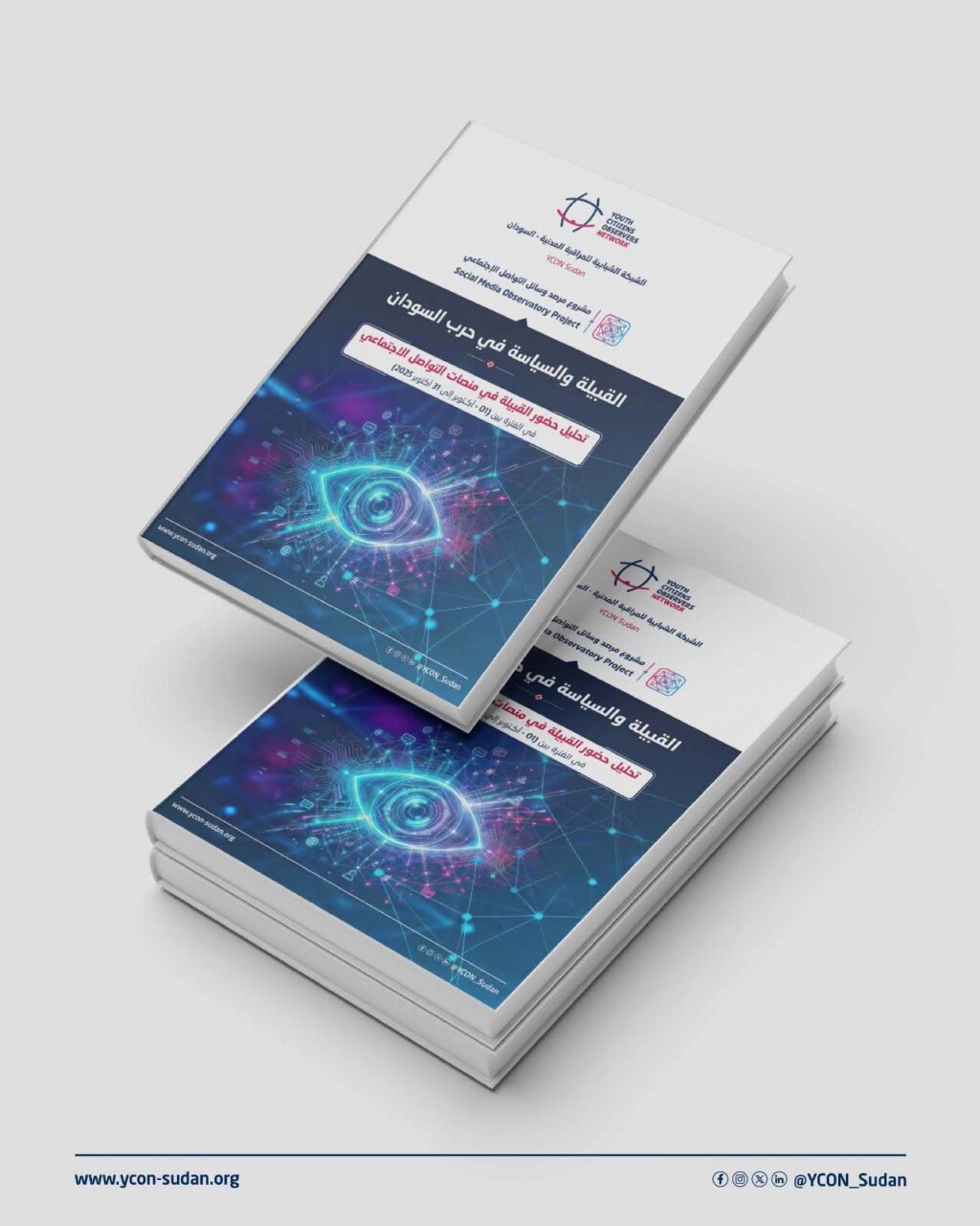
The Youth Citizens Observers Network (YCON) for civic monitoring says that the war that began in Sudan in April 2023 has turned social media platforms in Sudan into an active political arena where tribal discourse, hate speech, and racism are reproduced. A new report issued by the YCON Social Media Observatory on Saturday identified patterns of tribal presence in the digital space, and the relationship between tribal discourse, incitement and hatred, based on an analysis of more than 22,000 posts on Facebook, TikTok and X during October 2025.
The tribe is a digital political actor
The findings revealed that the tribe transformed into a central digital political actor during the war, with 83.3% of tribal content appearing in a direct political context and 78% of it linked to war events, including mobilization, rallying, declarations of political stances, and the frequent appearances of tribal leaders in the digital sphere. This reflects the tribe’s shift from a traditional social framework to a political mobilization tool with a clear influence on shaping public opinion.
The spread of hate speech
Conversely, the report revealed a widespread prevalence of tribal-based hate speech and racism, with 82% of the analyzed tribal content containing one or more forms of hostile rhetoric, including tribalism, dehumanization, demonization, incitement to violence, and insults related to lineage, color, or origin. Qualitative analysis indicates that this rhetoric is reframed within collective narratives that portray the war as a conflict between population groups, rather than simply a confrontation between political or military factions.
The findings demonstrate that the digital space has become an arena for symbolic conflict in Sudan, where narratives are produced, identities are reshaped, and the “us/them” dichotomies are amplified, with algorithms contributing to the spread of highly inflammatory and polarizing content. This reality poses a direct threat to the possibility of building sustainable peace, given its role in deepening social divisions, weakening trust in civil institutions, and reinforcing reliance on tribal frameworks as sources of protection and legitimacy.
Urgent interventions
The report concludes that urgent interventions are needed to counter hate speech, including supporting grassroots initiatives, developing partnerships with social media platforms to monitor hostile content in local dialects, promoting responsible media, enacting effective legislation to criminalize incitement, and supporting an alternative discourse based on citizenship, rights, and justice as cornerstones of social cohesion and peace.
 and then