




Amani Al-Tawil: Sudan’s unity is a red line, and the Islamists are “weak” without an alliance with the army
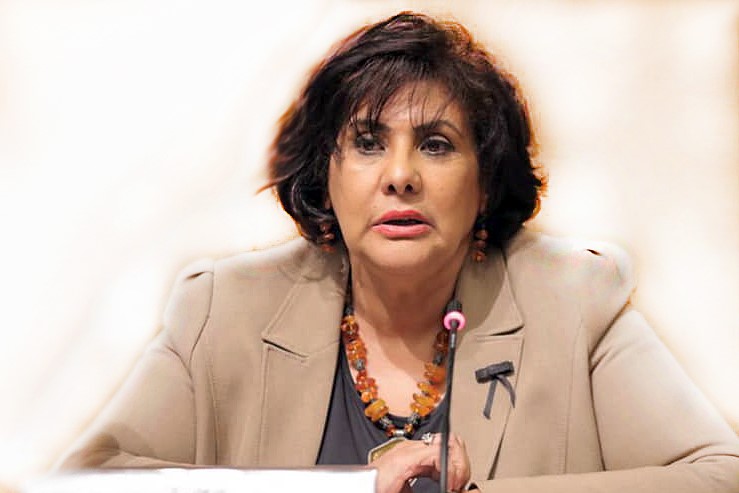
Dr Amani Al-Tawil, a leading expert on Sudanese affairs and Director of the African Programme at the Al-Ahram Centre for Political and Strategic Studies in Cairo
Interview by Ashraf Abdelaziz for Radio Dabanga
Dr Amani Al-Tawil, Director of the African Programme at the Al-Ahram Centre for Political and Strategic Studies in Cairo, has affirmed that Egypt’s red line in Sudan is centred on protecting the unity of the state and preventing its fragmentation, noting that the collapse of state institutions poses a direct threat to Egypt’s national security.
Al-Tawil explained that the influence of the “Islamists” is exclusively tied to their alliance with the army, and that without this alliance they remain a weak force lacking genuine means of influence.
She also stressed that the failure of international initiatives requires moving beyond “Sudanese anxieties” regarding Egypt’s role and clearly defining shared interests. She considered that the slogan “No to war”, raised by Sudanese communities abroad, has given the December Revolution a new voice that represents real pressure to stop the conflict and support peace efforts.
The Sudanese Muslim Brotherhood, without the army alliance, are “weak” and do not possess real tools of influence... Egypt’s red line in Sudan is “the unity of the state” and preventing its disintegration... The slogan “No to war” gave the revolution a new voice that strongly advocated for an end to the conflict.
Below is the full text of the interview:
Dr Amani, you recently spoke about the success of Egypt’s “red lines” approach in previous regional files. How does Egypt define its red lines in Sudan today amid growing existential threats to the Sudanese state? And is direct military intervention an option if these lines are crossed?
The “diplomacy of red lines” is not new. The Egyptian government usually signals this approach at moments of strategic awareness, when a crisis trajectory approaches a direct threat, or when the tools of mediation and soft pressure decline. This diplomacy does not necessarily mean the use of force; rather, it serves as a message to other actors in Sudan—whether local, regional or international—by clarifying the cost of continuing along a particular path.
In Sudan, the red line concerns the unity of the state. Based on Egyptian experience, the collapse of states in the region has not led to reconstitution, but to ongoing fragmentation, with Somalia perhaps the clearest example. These red lines also link Egyptian national security and Sudanese interests through a deep strategic relationship tied to several files, including terrorism, the Nile Basin, and the implications of the emergence of real security vacuums. Accordingly, Egypt does not deal with Sudan merely as a political decision, but as an integral component of the parameters of Egyptian security.
Turning to the Sudanese internal scene, many observers believe that the influence of elements of the former regime (the Islamists) within the Sudanese army is the main obstacle to any political rapprochement. In your assessment, to what extent does the current army leadership have the ability to take an independent political decision away from the pressure of these groups, particularly regarding peace agreements?
In my view, the army leadership is capable of repositioning itself closer to or further away from any political current, regardless of its influence—especially the Muslim Brotherhood and the factions cooperating with them—because the source of the Islamists’ strength in Sudan lies in their alliance with the army. If the army distances itself from them, they will lose a great deal. They are aware of this reality, which is why they insist on maintaining the alliance with the army, promoting political visions tied to it, and accepting the idea of military rule to preserve their interests. This largely confirms that without the army they are “weak” to a significant extent and lack substantial tools of influence.
With the faltering of the Quartet’s tracks and the multiplicity of international platforms (Jeddah, Manama, Geneva), do you believe that a solution in Sudan requires a new “international engineering” led by Washington, or does the answer lie in reducing “Sudanese anxieties” towards Egypt’s role and building a strong bilateral geopolitical alliance?
Frankly, I do not believe that any new engineering for Sudan would succeed more than previous attempts. The Quartet is supposed to find support from all influential parties, as it is the framework in which stakeholders in the Sudanese crisis converge. Therefore, summoning or demonising any party—regardless of its misdeeds in Sudan—is not in the interest of achieving a ceasefire. I do not believe there are new designs or equations that can bring the war to an end.
As for the issue of “Sudanese anxieties” towards Egypt, it is complex and historical, and requires diverse tools and multiple approaches within a single context. Sudanese public thinking bears significant responsibility here. Behavioural patterns often transmit rumours without verification and are heavily influenced by media and electronic committees. Moreover, Sudanese actors have not clearly defined their interests, nor agreed on them collectively. This is evident in the case of the Grand Ethiopian Renaissance Dam, where there is deep division even at the technical level. This state of fragmentation and division may not rise to what I would call “national interests”. It appears that Sudanese understanding of the concept of national interests is weak, and this is one of the main reasons behind anxieties towards Egypt—especially given the presence of third actors that play a role in Sudanese-Egyptian relations, influencing them for ethnic, regional or other reasons, sometimes through unethical tools, or because they employ soft power more skilfully than Egypt. The primary responsibility therefore lies with Sudanese actors to determine where their interests with Egypt lie, whether collectively or separately.
How do you read the recent momentum among Sudanese communities in the diaspora to mark the anniversary of the December Revolution and raise the slogan “No to war” in African capitals? Can this popular movement exert real pressure on the warring parties and those obstructing the peace process?
Regarding the momentum around the anniversary of the December Revolution, it indicates that the revolution still has a voice, and that this voice now has new levers, namely “No to war”. This places the revolutionary forces in a stronger position than other forces, creates real pressure to end the war, and supports international and regional efforts aimed at bringing the conflict in Sudan to an end.


 and then