




When women speak in rhythm… Rap as a space for expression and survival
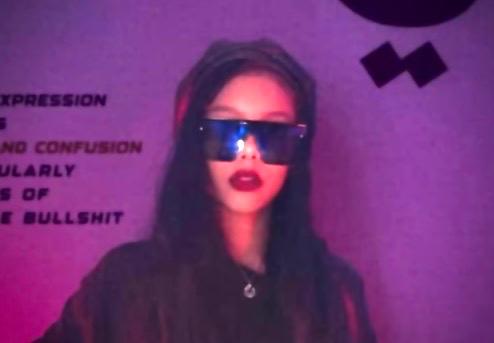
Rapper Rana (Photo: Supplied)
In a musical world that for many years has been shaped by fixed stereotypes and social constraints, Sudanese female rappers have chosen to express themselves in search of a safe space. For them, rap is not merely a fast beat; it is a means of confrontation and a way of transforming fear and long-postponed questions into words and rhythms. It is also a vehicle for narrating personal and collective experiences of the body, identity, freedom, war, and everyday life in a country whose features are constantly reshaped by violence, while spaces for expression continue to shrink day by day.
A female breakthrough into a closed space
The experience of women’s rap in Sudan remains limited in number, but every voice that emerges in this field carries compounded challenges: from social judgement and stigma to the difficulty of finding safe places to record, to criticism and harassment. Despite this, young women persist in breaking into this space, both inside Sudan and abroad, placing rap at the heart of a wider debate about women’s right to self-expression and to choosing their artistic tools without censorship or control.
Rapper and singer Rana told the Dabanga Rap programme that her relationship with music began at an early age. She grew up in a household that loved music and wrote her first rap song at the age of ten as a form of self-expression. She explained that she later stopped for a long period, before returning to rap with the outbreak of the December Revolution, driven by a need to articulate what was happening in Sudan. Today, she says, she has returned to rap as a singer and performer with the same energy, but with a different level of awareness and lived experience.
Rana considers rap to be one of the most powerful ways of making one’s voice heard, particularly for women. She notes that women’s entry into the genre is often perceived as an act of rebellion, while the real challenge lies in the lack of safe spaces for recording and expression without harassment or exploitation. She adds that many Sudanese female rappers have been forced to work and appear from outside the country because of the limited space inside Sudan, urging young women to learn self-recording skills and to place their own safety and priorities first at every stage.
Issues bigger than art
Rapper Maram Abdelaziz, for her part, said that her experience with the group Jota lasted around three years, before its members dispersed in search of opportunities for professional growth and a decent livelihood. She explained that the challenges previously faced by rappers in Sudan were far greater, particularly in terms of production, support, and the absence of platforms, compared with what is now available through social media.
Maram added that Sudanese rap is full of urgent issues that deserve to be voiced, asking: if artists do not speak about people’s suffering — such as the siege of El Fasher or the consequences of war — then who will? She argued that women’s rap is not fundamentally different from men’s experiences in the genre, stressing that she has never felt treated differently, either by audiences or within the scene itself. She also noted that rap audiences often display a distinct level of awareness and a deeper engagement with public issues.
Reflecting on these experiences, some listeners said that women’s rap in Sudan still faces serious challenges, foremost among them the lack of safe spaces for expression. One listener pointed out that most Sudanese women who perform rap have gained visibility from outside the country, which he believes reflects the difficulty of practising this art form inside Sudan and the absence of an environment that allows female rappers to express themselves and their work freely.
Ahmed Abu Aqla said that women’s entry into rap represents an exciting and fresh addition to Sudanese society, arguing that women’s rap carries a different kind of energy. He added that female voices often generate a wide resonance and attract strong attention, making the experience both rich and impactful.
From the margins to the revolution
Rap first emerged in Sudan under the influence of global hip-hop culture, but for years it remained confined to the margins. With the expansion of social media, rap moved beyond the margins to become a widely used form of expression, particularly among young people, using language rooted in everyday realities and street vernacular.
During the December Revolution, rap played a prominent role in expressing popular anger, documenting moments of protest, and conveying the voice of the street in a direct and rapidly circulating language. Among the most prominent rap artists associated with the revolutionary mood was Ayman Mao, who came to be known as the “artist of the revolution”.
As part of a survey conducted by the Dabanga Rap programme with a number of listeners, several participants said that Sudanese rap has become the language of the moment and of the street, due to its ability to articulate youth issues in a clear and accessible way. One listener said that the impact of rap on the Sudanese street varies, noting that he is not a regular follower of the genre and does not actively search for new releases unless he encounters them on social media platforms such as TikTok, Facebook, or WhatsApp. He added that he listens to some songs when they gain popularity online, without considering himself part of rap’s core audience.
He explained that there are successful rap artists with large followings — Sudanese, Egyptian, and international — some of whom have been active in the field for many years. He believes that rap addresses a wide range of issues, including sensitive topics linked to the lived realities of young people, and that its influence is most evident within this age group.
He also pointed out that rap artists have a genuine ability to influence their audiences because they tackle subjects closely connected to young people’s interests and everyday concerns, even if he himself is not a regular listener.
Maysaa Mohamed said that many rap artists use the genre to convey specific messages, noting that lyrics and performance often carry clear and purposeful meaning. Enas Kamal argued that rap has become one of the most widespread musical styles among young people because it addresses social and peace-related issues in direct language, while rhythm and delivery help convey messages in a more accessible and fluid manner.
Shahad Mohamed added that rap has become one of the most common forms of music on the Sudanese street in recent years, precisely because it reflects young people’s realities and expresses issues, they experience daily. She described rap as a form of peaceful expression through which young people narrate their suffering, experiences of displacement, deferred dreams, injustice, and the details of everyday street life.
She also noted that Sudanese rap is distinguished by its language, style, and local dialect, as well as its deep connection to Sudanese culture — factors that have helped it reach audiences quickly and made many feel that it speaks directly for them. According to her, a growing number of artists have found in rap a powerful means of expressing their voices and their diverse issues.
 and then